
Sports Classes for Kids in Austin: How to Find the Right Fit
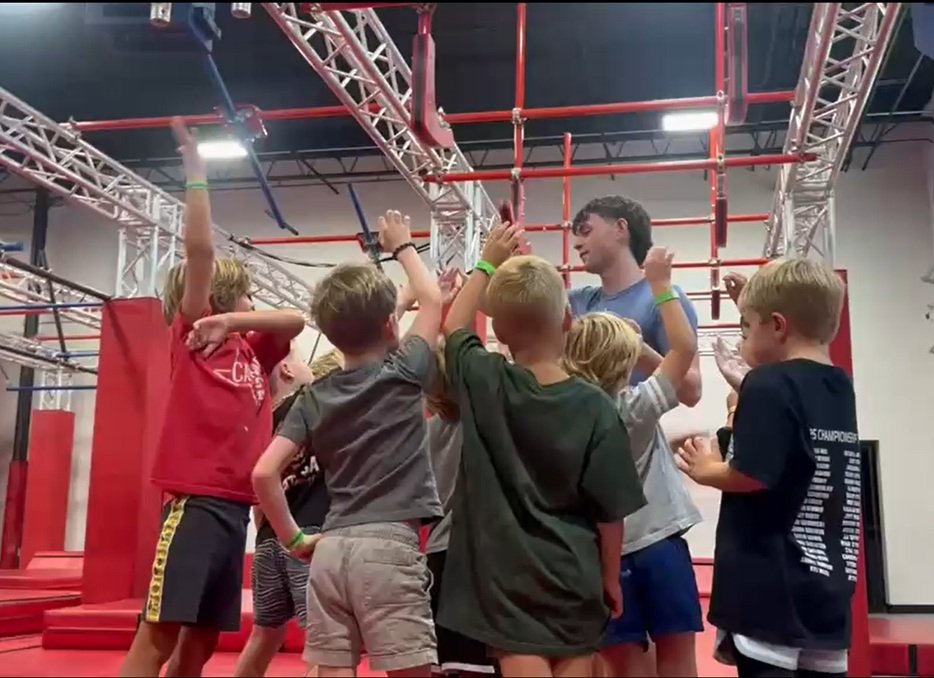
At some point, almost every parent asks some version of the same question:
What should we put this kid in?
Maybe they have enough energy to make sitting through dinner feel like an endurance sport. Maybe soccer didn't click. Maybe they love climbing but aren't interested in scoring goals. Maybe they've never considered themselves particularly "sporty" at all.
Or maybe you simply want them doing something active after school that involves more than a screen and doesn't require consulting the Austin weather forecast like you're planning a lunar launch.
The good news is that Austin has a lot of options. Kids can try soccer, basketball, gymnastics, swimming, martial arts, dance, climbing, fencing, parkour, ninja and plenty more.
The harder part isn't finding a sport. It's finding the kind of movement your particular child actually wants to come back to.
And those aren't always the same thing.
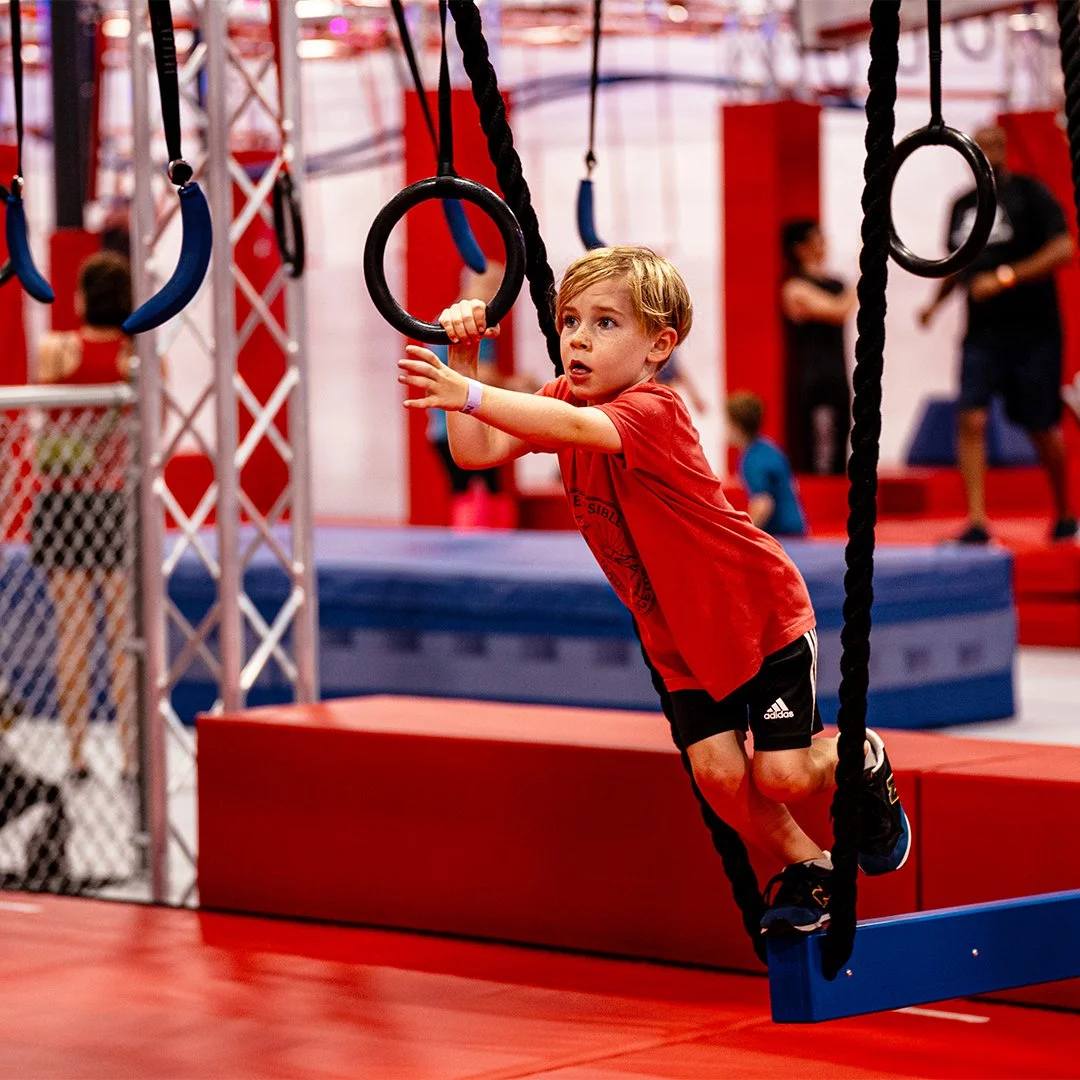
What are the best sports classes for kids in Austin?
There isn't one best sport for every child.
The better question is:
What kind of challenge makes my child want another try?
Some kids love being part of a team. Some love mastering a precise technique. Some want to race. Some want to perform. Some want to climb something and figure out how on earth they're supposed to get to the other side.
The sport matters.
But the fit matters more.
What kind of challenge lights them up?
Different activities reward different things. Before choosing a program, think about what your child already seems drawn toward.
"I want to play together."
They enjoy teammates, games, passing, shared goals and competition.
"I want to get that skill right."
They enjoy repetition, form, precision and seeing a skill improve.
"How do I get across that?"
They love figuring things out, climbing, experimenting and trying a new route.
"Please just let me go."
They mainly want space to run, move, explore and use some of that energy.
Team sport, individual sport or something in between?
One useful way to narrow down kids sports is to stop thinking about the equipment for a moment. Forget the soccer ball. Forget the balance beam. Forget the climbing wall.
Think about where the challenge comes from.
In many team sports, part of the challenge comes from other players. You react to teammates and opponents. You learn positions, rules, strategy and how to work toward a shared result.
In activities like gymnastics, swimming and martial arts, progress can be much more individual. The child is often working on their own technique, strength, speed or skill while training alongside other kids.
Then there are activities such as climbing, parkour and ninja where the environment itself becomes part of the challenge.
Can I reach that?
Can I balance across this?
Where should my foot go?
Could I swing farther if I changed my timing?
That difference sounds small.
For some kids, it is everything.
What if my child doesn't like team sports?
First, it doesn't necessarily mean they don't like sports. They may simply not enjoy that version of sports. A child may dislike waiting for the ball but love working on a climbing route. They may dislike the pressure of a game but happily spend twenty minutes trying to land one skill.
They may not care who won but be incredibly motivated by:
"I couldn't do that last week."
Individual and obstacle-based sports can still be social. Kids train beside other kids, learn from coaches, encourage each other and share the room. They just don't necessarily need every athlete to succeed at the same thing at the same moment. For the right kid, that's a very different experience.
What does each kind of sport ask from a kid?
Play the game together.
Rules, teammates, opponents, passing, positioning and shared outcomes.
Often clicks with:Kids who love games, competition and being part of a team.
Master the movement.
Body control, technical positions, apparatus skills and repeated practice.
Often clicks with:Kids who enjoy precision and working toward clearly defined skills.
Learn the system.
Technique, sequences, structured progression and discipline within a defined style.
Often clicks with:Kids who appreciate routine, instruction and measurable advancement.
Find the route.
Grip, body positioning and figuring out how to move through a vertical problem.
Often clicks with:Kids who like puzzles, heights and individual challenges.
Repeat. Refine. Go farther.
Technique, rhythm, endurance and individual progression in the water.
Often clicks with:Kids who enjoy repetition and improving a personal time or skill.
Solve the obstacle.
Climbing, swinging, balance, jumping, timing and physical problem-solving.
Often clicks with:Kids who want variety, obstacles and lots of different ways to make progress.
What are good indoor sports for kids in Austin?
Austin gives parents a special reason to appreciate indoor sports.
August exists.
So does February every few years when Texas decides to surprise everybody.
Indoor options can include gymnastics, martial arts, indoor swimming, climbing, dance and ninja.
An indoor program doesn't automatically make an activity better, but it can make a weekly routine much more predictable.
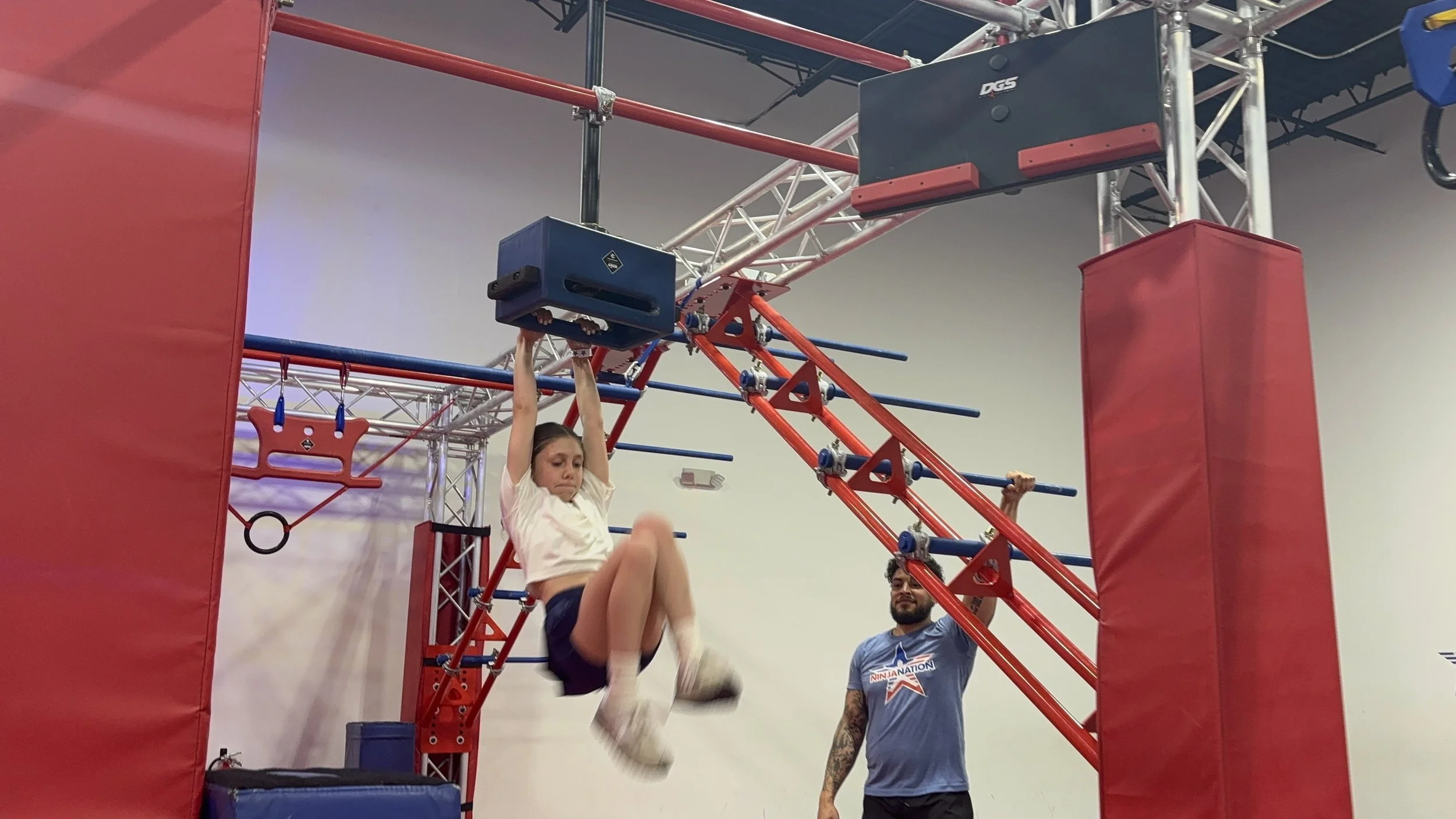
Octo Ninja, for example, is a 15,000-square-foot indoor obstacle gym on North Lamar, so training doesn't depend on whether it's 104 degrees, raining sideways or suddenly 47 degrees because Austin got bored.
What sports are good for high-energy kids?
It depends on what the child wants to do with that energy. Some kids love running continuously. Others want short bursts of hard movement. Some want competition. Others want to climb, jump and immediately find the next thing. For a child who loves variety, activities with lots of different movement challenges can be particularly interesting. That's one reason some kids connect quickly with ninja.
They aren't repeating one single movement for an hour.
They may balance.
Then swing.
Then climb.
Then jump.
Then stop and stare at an obstacle like it has personally offended them.
Then try it again.
What exactly is ninja?
Ninja is an obstacle-based sport built around movement and problem-solving. Athletes learn skills such as climbing, swinging, balance, jumping, grip, body control, timing and moving efficiently through obstacles. But there's another piece that is harder to see from a list of skills. An obstacle is also a physical puzzle. The athlete has to figure out: Where do my hands go?
When should I release?
How much swing do I need?
Why did that attempt miss?
What should I change next time?
At Octo Ninja, that idea is central to how we approach the sport. A miss isn't automatically the end of an attempt. It can be information for the next one.
Ninja vs gymnastics: what's the difference?
There is plenty of overlap. Both can involve strength, balance, coordination, body awareness and technical movement. Gymnastics tends to organize training around established skills, apparatus and movement standards.
Ninja organizes much of the experience around getting through obstacles.
A child may use similar physical qualities in both activities while experiencing them very differently. If your child loves precise positions, tumbling or mastering a defined skill, gymnastics might immediately make sense. If they see a row of hanging objects and immediately start planning a route through them, ninja might deserve a look.
Neither one needs to beat the other.
You're looking for the thing your kid wants to practice.
Ninja vs parkour: are they the same?
Not exactly.
Parkour emphasizes moving through an environment using skills such as running, jumping, vaulting and climbing.
Ninja shares some of those ideas but generally adds purpose-built obstacles, hanging elements, swinging movements, balance challenges and course-style problem-solving.
There is significant crossover.
A kid who enjoys one may very well enjoy the other.
Ninja vs climbing: what's different?
Climbing often asks:
How do I get up this route?
Ninja may ask:
How do I get from this platform, across these rings, over that wall and onto whatever ridiculous thing somebody decided to hang next?
Both can reward technique and problem-solving. Ninja simply uses a wider mix of obstacle types and movement patterns.
Ninja vs martial arts?
Martial arts tend to have a defined technical system: positions, strikes, forms, sequences, sparring or other traditions depending on the discipline. Ninja is obstacle-focused. Instead of learning how to respond to another person, the athlete is often learning how to respond to the environment in front of them.
Again, the question isn't which is universally better.
It's what makes your child say:
"Can I go again?"
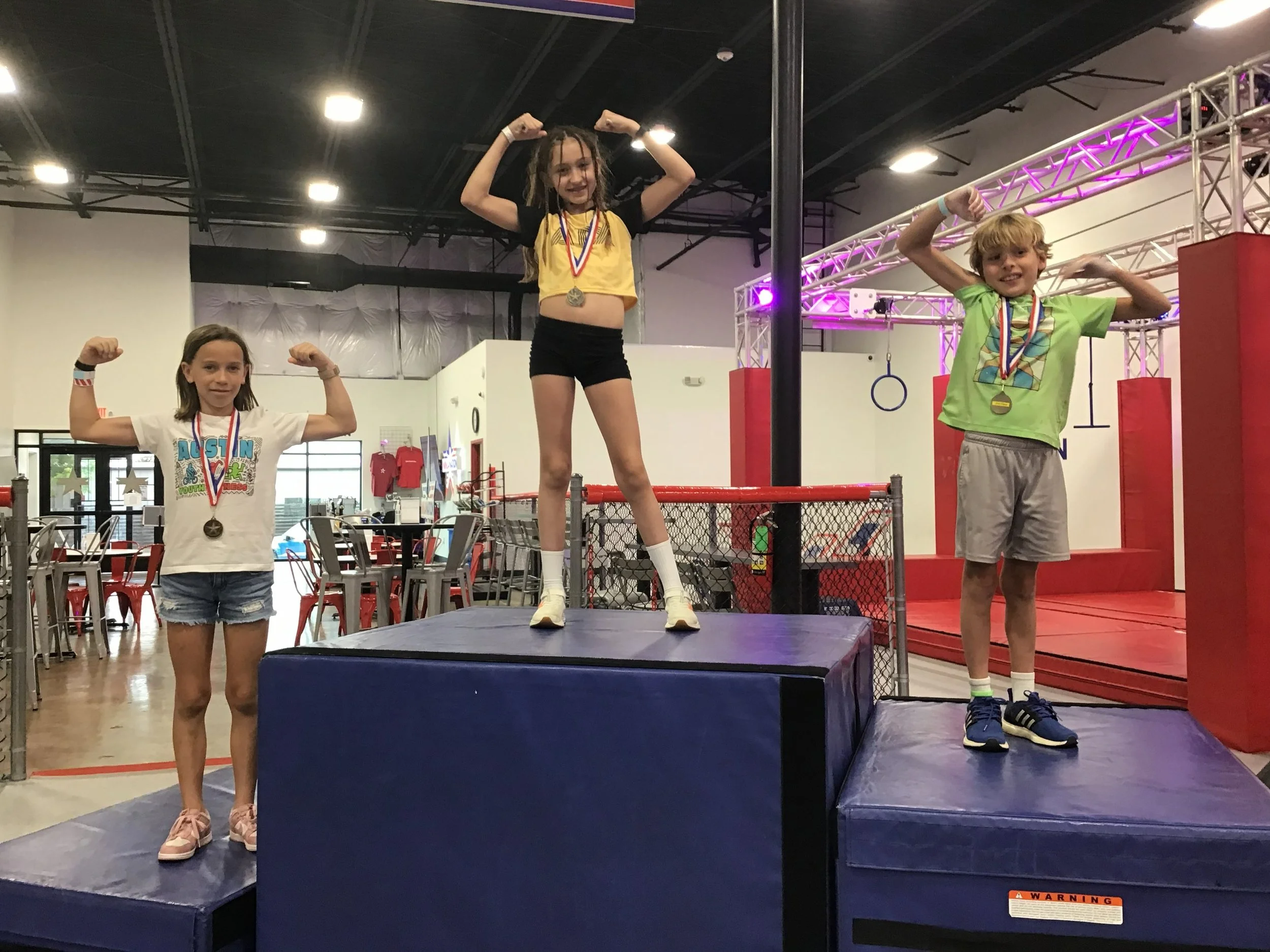
Your kid sees the playground differently than you do.
You see playground equipment. They see a route. You see the back of the couch. They see an invitation.
What happens in a kids ninja class?
This is where playing on obstacles and learning the sport start to become different things.
At Octo Ninja, current youth classes combine about 50 minutes of coach-led instruction with 10 minutes of open practice.
Kids may see a skill demonstrated, work through a progression, practice it on obstacles, receive feedback and then get time to experiment with what they've learned.
The point isn't:
"Here's the obstacle. Good luck."
Good coaching should help a child understand what they can actually change.
Maybe it's timing.
Maybe it's body position.
Maybe it's where the foot lands.
Maybe the current version of the obstacle is simply too difficult and needs a different progression first.
That approach is a big part of Octo's coaching philosophy: meet the athlete where they are and make the next attempt more useful.
Does my child need to already be athletic?
No.
And this question deserves a clearer answer than "all abilities welcome." Kids take classes because they're there to learn the skills. They do not need to arrive knowing how to swing. They don't need impressive grip strength. They don't need to climb a rope. They don't need to be fearless. And they definitely don't need to know what a lache is.
A beginner may be working on the first piece of a movement while another athlete is connecting several obstacles together.
They're both doing ninja. The useful question is not:
"Can my kid already do this?"
It's:
"Is there an appropriate version they can start learning?"
What age can kids start ninja?
At Octo Ninja, our main youth ninja class pathway currently serves ages 5–12.
Younger kids can start exploring movement through Little Ninjas, our program for ages 3–5.
Different ages need different kinds of challenge, which is why putting a preschooler into a scaled-down version of a nine-year-old's workout isn't particularly interesting to us.
Young kids need movement, exploration, basic obstacle experiences and plenty of room for play.
Older kids can begin digging much deeper into technique and progression.
How much do kids ninja classes cost in Austin?
Pricing varies between gyms and programs, so parents should pay attention to what is actually included rather than comparing only the largest number on the page.
At Octo Ninja, the current drop-in price for one youth ninja class is $35.
Ongoing monthly youth enrollment is $140 per month and includes:
Four coached classes + Unlimited Open Gym!
And that's where the comparison gets interesting.
Four $35 drop-in classes already equal $140.
Monthly enrollment is also $140.
The difference is that ongoing enrollment includes Open Gym access so the athlete has somewhere to actually work on those skills between classes. So if youre serious about training or just serious about getting some movement in, we’ve got you covered.
Four classes already equal $140.
For a kid who wants to train every week, monthly enrollment changes what happens between those classes.
- 4 individual coached classes
- Open Gym purchased separately
- Flexible one-off attendance
- 4 coached classes
- Unlimited Open Gym included
- Consistent weekly training
Why does Unlimited Open Gym matter if they're already taking a class?
Because learning and practicing aren't the same thing.
Imagine a child learns a new swinging technique on Tuesday.
If the next time they touch a ring is the following Tuesday, they've had one hour of instruction and seven days away from the movement.
If they come back during Open Gym, they can try it again while the idea is still familiar.
They can experiment.
Miss.
Adjust.
Try again.
That's exactly why Octo's current class membership combines structured weekly instruction with Open Gym.
Learn it in class. Own it in Open Gym.
Open Gym is still self-directed rather than a second class.
But now there is somewhere to put the thing they just learned.
Where can kids take ninja classes in Austin?
Octo Ninja offers youth ninja classes at our 15,000-square-foot indoor obstacle gym in North Central Austin:
Octo Ninja
6500 N Lamar Blvd, Suite A
Austin, TX 78752
Our current youth classes serve ages 5–12, from first-time beginners through increasingly advanced ninja training. (We do have classes for our Little ninjas too if they are under the age of 5. CHECK OUT LITTLE NINJAS
Classes include structured coaching, obstacle progressions and open practice. Ongoing monthly enrollment is currently $140 for four coached classes plus Unlimited Open Gym. New families can currently try an eligible first class free, subject to class availability. And that last part is intentional. We don't think you should have to decide whether your kid has found their sport before they've actually tried the sport.
Let them try the sport.
Meet a coach. Learn a real skill. Try an obstacle that doesn't work the first time. Then ask the only review that really matters:
Still figuring out which sport fits your kid?
Here are quick answers to some of the questions parents ask when comparing kids sports, activities and ninja classes in Austin.
What are the best sports for kids to learn?
There is no single best sport for every child. Team sports may appeal to kids who enjoy competition and shared goals, while activities such as gymnastics, swimming, martial arts, climbing and ninja can offer more individual progression. The best fit is usually an activity a child enjoys enough to keep practicing.
What sports are good for kids who don't like team sports?
Swimming, gymnastics, martial arts, climbing, track, parkour and ninja can all give kids individual goals while still letting them train socially alongside other children. For some kids, removing the pressure of a team score makes physical activity much more enjoyable.
What age should kids start sports classes?
It depends on the activity and the child. Look for programs designed for your child's developmental stage rather than simply smaller versions of older-kid training. At Octo Ninja, Little Ninjas serves ages 3–5, while youth ninja classes serve ages 5–12.
Is ninja a good activity for high-energy kids?
It can be a great fit for children who enjoy frequent movement and variety. Ninja can involve climbing, swinging, balancing, jumping and solving different obstacle challenges rather than repeating one type of movement for an entire class.
Is ninja training a good workout for kids?
Ninja can challenge grip, coordination, balance, agility, body control and overall movement skills. The exact physical demands depend on the athlete and the obstacles being practiced, which makes it possible for beginners and more experienced kids to work at different levels.
Do girls take ninja classes?
Absolutely. Ninja skills such as balance, coordination, grip, climbing, swinging and problem-solving are not gender-specific. Girls participate throughout the sport, from first-time beginner classes through advanced training and competition.
Can my child try ninja before we enroll?
Yes. New families at Octo Ninja can currently try an eligible first youth ninja class free, subject to class availability. It's one of the easiest ways to find out whether your child actually enjoys the sport before committing to ongoing classes.
Try the First Class Free →